Skip to content


Every year brings a new wave of security products promising to close the gap that last year’s products didn’t quite manage to close. AI-powered threat detection, next-generation endpoint protection, another dashboard to watch. It’s tempting to believe the answer to feeling exposed is simply buying the next thing.
Most of the time, it isn’t. Most breaches don’t happen because a business lacked a sophisticated enough tool. They happen because something basic wasn’t in place: a password that was reused, a login that didn’t need a second factor, a laptop that hadn’t been updated in months. No amount of extra software fixes that.
The Instinct to Buy More Is Understandable, and Usually Wrong
Buying a new tool feels like progress. It’s a concrete action, it shows up on an invoice, and it’s easy to point to as evidence that security is being taken seriously. Fixing the basics feels less impressive by comparison: turning on a setting that should have been on already, writing a policy nobody will read twice, making sure old accounts actually get switched off.
But the data consistently backs the boring option. The vast majority of breaches trace back to fundamentals, not sophistication. Attackers don’t need to out-clever a well-defended business when an undefended basic gap will do the job just as well.
What “The Basics” Actually Means
Not vague advice, specific things that either are or aren’t in place:
- Multi-factor authentication, switched on everywhere it can be. Not just email. Everywhere.
- Password management that actually gets used, not just recommended and ignored.
- Devices and software kept up to date, with a clear process rather than relying on individuals to remember.
- Access reviewed regularly, so leavers and role changes don’t leave lingering permissions behind.
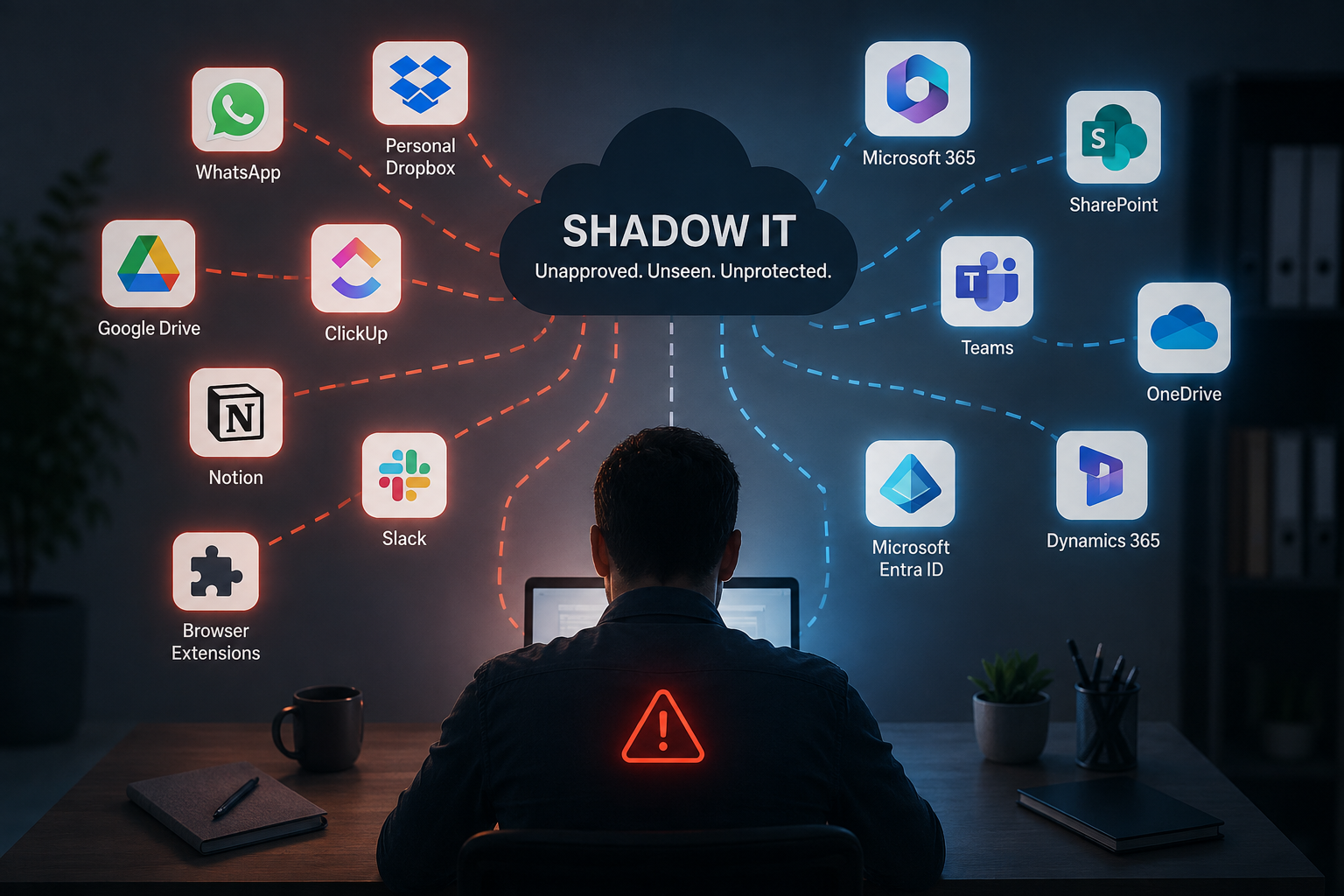
- Visibility over what’s already running across the business, not just the tools IT officially signed off.
- Someone actually watching for problems, not just a number to call if something breaks.
None of this is exciting. All of it matters more than most of what gets sold as the next big security investment.
Why Tools Without Basics Don’t Work
A new security tool sitting on top of weak basics is a bit like installing a better alarm system in a house where the back door doesn’t lock properly. The alarm might genuinely work. It’s just not solving the actual problem.
This shows up constantly in practice. A business invests in advanced threat detection, then gets breached through a reused password on an account that never had MFA switched on. The tool did exactly what it was supposed to do. It just wasn’t protecting against the thing that actually went wrong.
Tools are genuinely valuable, but only once the fundamentals underneath them are solid. Buying more before that point isn’t extra protection. It’s extra spend.
A Simple Way to Check Where You Actually Stand
Before adding anything new to the security stack, it’s worth answering a few plain questions honestly:
- Is MFA actually switched on everywhere it should be, or just where it was convenient?
- Would you know if someone was still able to access systems after leaving the business?
- Are devices getting updated automatically, or does it depend on someone remembering?
- If something looked wrong right now, would anyone actually notice?
If any of those answers are shaky, that’s the starting point, not another platform.
The Bottom Line
Security tools have a place, and a good stack matters once the groundwork is solid. But basics fixed properly will do more for most businesses than another tool bought on top of gaps that are still open. Before spending on what’s new, it’s worth being honest about what’s missing.
If you’re not sure where your business actually stands, our free security audit gives you a clear, no-obligation picture, and a sensible starting point before you spend on anything else. Get in touch with the team at Gardner Systems to talk it through.